Thursday, October 06, 2005

State-sponsored binge drinking

On the Friday night after the sports festival was a party held in my honor by the other teachers in the English department. These sort of parties - usually not for any specific purpose - are a fairly common occurence throughout the academic year, I suppose as a way to build friendly relations among teachers. This is encouraged to the point that part of my pay is automatically deducted every month to go towards these parties; about $30 a month. In my reckoning, this means that they are basically taxing me to buy me alcohol later. Another way to look at it is that it mandates that a certain amount of my paycheck is put aside for alcoholic beverages. Anyhow, this amuses me.

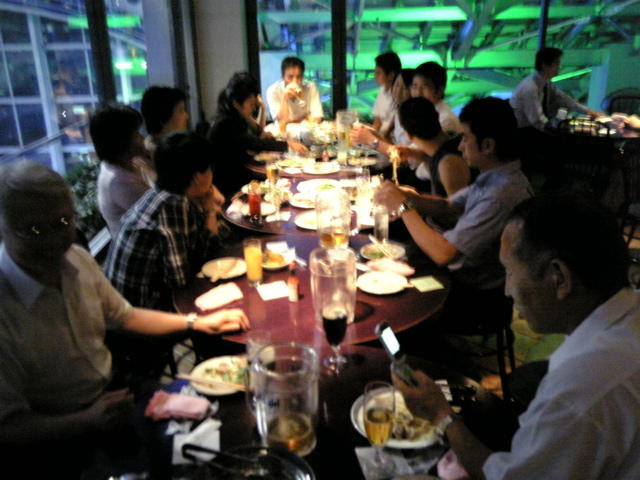
We meet up at a local western-type bar where we've got a whole section covered. There are the 12 teachers and 3 college students who have been undergoing teacher-training at the high school for the last couple weeks. One teacher stands up and gives a brief thank you for coming and let's welcome the new teacher bit, then the nomihodai begins. A 飲み放題 (nomihodai) is an all-you-can drink deal where you pay a set rate, usually around $20, for 2 hours of unrestricted drinking. This makes sense in Japan from a business perspective, since most people are unable to really have more than a couple drinks anyways. Being an American though, I have always felt it is my obligation to try to really make the place lose money on the deal. In this particular case, I feel a certain bond placed on me as both a foreigner and as the new guy to really drink more than in any way necessary.

So, I order drink a couple beers along with the other teachers and then up the ante by ordering an entire pitcher for myself. Then I am invited by one of the teachers to drink sake, so I polish off a bottle with him. At this point, going back to the menu, I notice they also serve scotch, and I start getting a little obnoxious, as I am want to do when I am a bit tipsy. I order a scotch and water and then nonchalantly ask the Beach Boys Sensei if he'd like to join me in a glass. He feigns reluctance, so I make the decision for him and order two. This becomes two more and two more. By the end of the night he goes home hanging on the shoulders of me and another teacher, while they make fun of each other like two frat guys. I retire, dignity intact, though in a sense not so much since I essentially goaded a guy into drinking too much. Anyways, it's just harmless drinking, but it's interesting that they can still get away with this kind of thing while fully adults, if not nearing retirement age.

The main interesting thing was seeing how the teachers behave outside of class. Other than the aforementioned lack of restraint, I managed to get into political discussions with a few teachers that I would never have expected could have occured in school. I also saw that some teachers, alcohol or not, are just as boring and lame as I imagined, whether in English or in Japanese. The best part of the night, however, was when one of the teachers cornered me at a table set aside - seemingly the designated representative from the group - and said, "So...I hear you have a girlfriend." Once I confirmed it and offered him a picture of Maiko, he snatched it and an over to the rest of the teachers, saying "Look look look!!! It's a picture of Adams Sensei's girlfriend!" Two of the teachers that are usually so exhausted during the day that their vocabulary consists entirely of sighs leapt to their feet and cried out "OOOOOOOO Let me see let me see!" The pictures were passed around for the inspection of the entire department, and my reward was a serious of winks and smiles for the rest of the week. Still, every time I mention going to Tokyo to see Maiko, I get a comment like "Ohhhh, tell Maiko-chan 'hi' for me! (heeheehee)" The hilarious thing about this is that most of the teachers reacted, to a degree that is almost uncanny, exactly like their students did when I told the students about my girlfriend. People at the school really love gossip, it seems.

Wednesday, October 05, 2005

The Sports Festival

So last Thursday was the yearly 体育大会 (taiiku taikai) "Sports Festival". Wow. I knew the students had been preparing for it since the beginning of the semester, but I never expected it to be quite this big of a deal. Basically the entire school is split into ten teams identified with ten different colors, with every student participating. Each team is made up of students from a particular home room - three to a team - meaning they are all from different grades. Though each of the ten teams has the same basic color, each of the three teams making up the ten have their own designs for the t-shirts of each homeroom; 30 different t-shirt designs. All this adds up to is a huge mix of kids from different homerooms and social groups thrown together in the spirit of team work and a developing of a sense of community within the school between students who might not otherwise meet. That and a lot of girls wearing colorful, cute t-shirts. (Guess which part I enjoyed the most?)
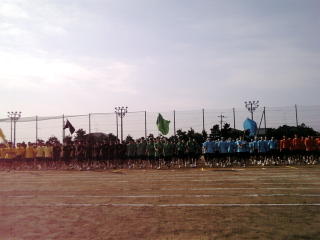
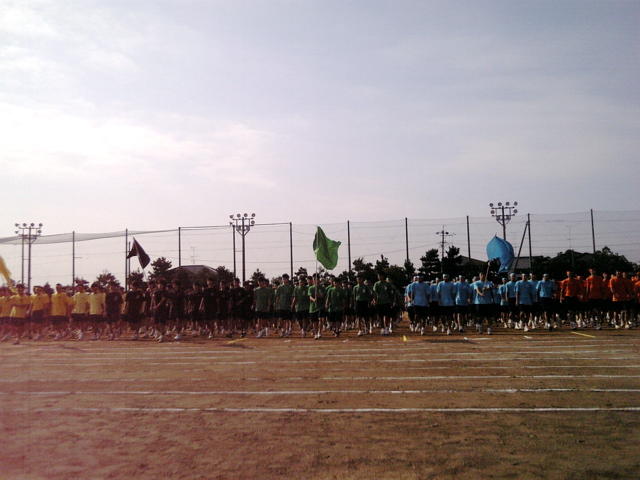
The event began, as most every one seems to here in school, with a long drawn out speech from the principal that none involved - including the principal himself - paid any particular attention to. Finishing his address, he stood on the elevated platform as the students aligned themselves in orderly rows based on colors and began a marching procession with flags aloft. This performance culminated with the flag-bearers from each color converging on the principal and raising their flags in a sort of triumphal salute to his august countenance, as he smiled down at them, bowing to their obsequious display.

Then the competition began with a series of 1000 meter relays. I was invited to participate but respectfully declined, unsure if I could in fact still complete a full lap running. It's one thing for me to enter an event I can dominate - thereby winning the respect of my students and peers in the faculty - but I had no intention of being publicly emasculated by a bunch of kids. Instead I watched the action in the ample shade of the three tents erected on the sidelines for the teachers and parents to sit and watch from. Apparently the teachers used to compete as well, but now they just sit back and watch for the entirety of the 6 hours. So I made the most of a tough situation, sitting back in my chair and being brought tea by a few girls in charge of keeping the teachers and parents adequately refreshed with hot and iced tea during their strenous sitting.


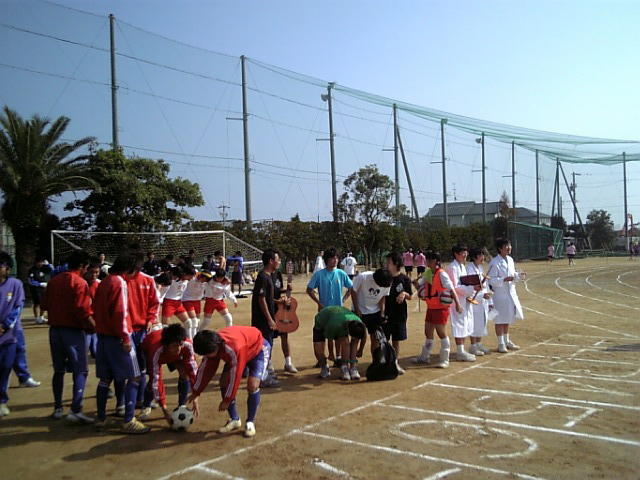
After the relays was a fun-run of sorts, with students competing based on their clubs. Each club ran at one time, with the members all dressed up in their uniforms or holding their equipment. So the soccer club wears their uniforms, the basketball their jerseys, but the science club wears white lab coats and carries levels, the music club runs with acoustic guitars, and the tennis club wears ski masks and runs around hitting tennis balls at each other.


Before the event, I asked several people why the hell there was a giant pile of 10 foot long logs next to the tents, but couldn't get a satisfactory explanation. For some reason, nobody else seemed to have noticed. It turns out, they were for the next - my favorite - event, what I'll call the log war. So these logs are placed in the center of the field, lined up parallel to one another, side to side stretching across the width. The colored teams send 20 representatives at a time, and these are lined up to face each other across the field with the logs in the middle. Basically, like a battlefield.
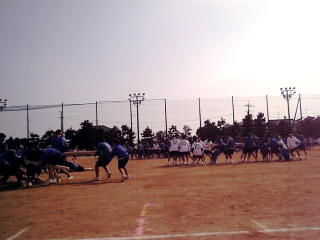
The ref shoots the starting gun and the kids race for the logs, the point being to take as many logs back for your team as possible in a certain amount of time. However, with a limited amount of logs, maybe 20, after each team takes their first log, they have to struggle to try to bring the others back, sometimes five on five, sometimes 1 on 7, just trying to slow them down. This was the most exciting event for me, especially the beginning. With the two large groups bracing themselves and staring across the field at each other, the tension was always palpable. With the sound of the gun came the thundering of kids racing into the center at full speed, where they basically crashed into a great, seething mass of total chaos. Again, basically like a battle. There were even kids suffering from mock-shell-shock, who came up to the teacher beforehand: "Sensei, I just don't think I can take it anymore! I'm not made for this!", only to be shot down by this general's rejoinder, "You have no choice, get in there and make your team proud!" I couldn't help wishing I were able to participate, but it was probably better I didn't have the chance. I know I would have gotten carried away, started throwing some Japanese kids around, and before you know it we'd have a real battlefield after all.
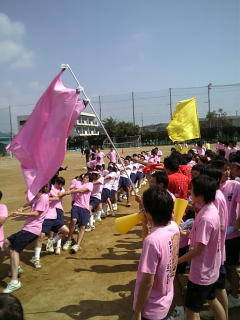

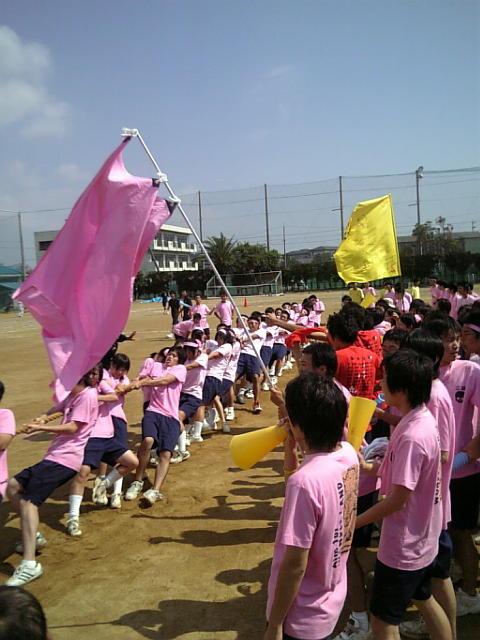
The next event was the tug of war, with some thirty students on each side pulling for their lives and the rest of each team on the side cheering wildly, jumping up and down and yelling through bullhorns. Even the other teams came over to urge one side or the other on. Sitting in the tent, I jokingly asked a couple teachers how many Japanese kids they thought I could defeat in a tug of war, with my bet on "at least two boys and one girl, maybe two girls." They however, without the cultural prism of sarcasm to separate sincerity from humor, took this up as a serious point of discussion, and the idea was bandied about at length. I'm going to get myself into real trouble with the teachers here sometime with sarcasm.
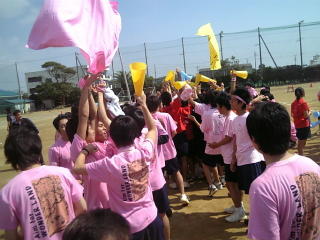
The most interesting part of the event though, and this was a thing brought home to me again and again in every event, was the way in which all these kids really pulled for each other. I mean, they took these games seriously and they wanted to win each one, but they wanted to win for their team, not for themselves. When they watched other teams, they cheered on their peers as much as they did their own. Several teachers that day asked me whether they had this sort of thing in the US, and I had to admit that this is the kind of thing I only remember having in elementary school. One, I can't really see disaffected American kids participating in something so wholeheartedly. Two, I can't see them giving a shit about the idea of these groups. Well, maybe replace "disaffected American kids" with "me" - I couldn't imagine me in high school participating. This is exactly the kind of thing I would have scoffed at; "What's the point of all this community building?" I would smirk. "This is gay, and so is anyone who wants to do this crap."

But maybe that's the reason I never felt part of anything at school. Sure, there was debate, and the occasional sports team, but did I ever feel really connected to all the kids at school? Did I at UCLA? Does anyone, really? Maybe at the football or basketball games you yell at Torrey Pines or USC or whatever, but I don't feel like it carries past there in any significant way. Anyways, this is one of those situations in which the community first - individual second way of thinking in Japan really shines through, and it makes me kind of wish I harbored any like sentiment for any group larger than myself, my family, or my immediate friends.


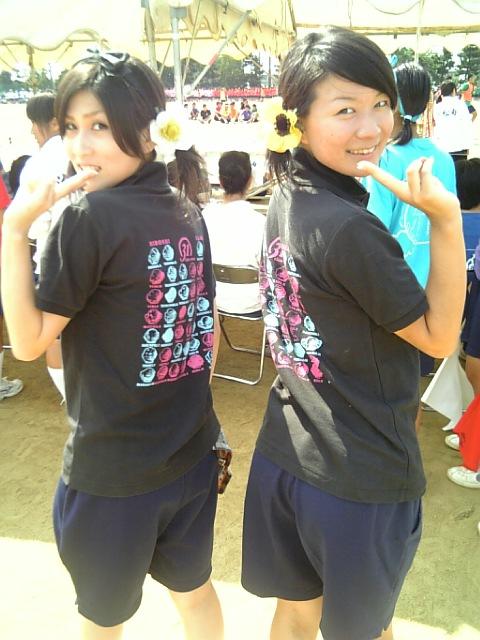
After a while, I hit upon an even more enjoyable exercise than actually watching the events when I decided to document all the different t-shirt designs.
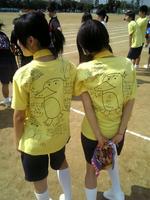


This involved me going around asking girls if I could take pictures of the backs of their shirts. Often the shirts had not just the original design, but each girl had drawn more herself or had her friends sign the back.
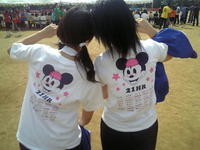


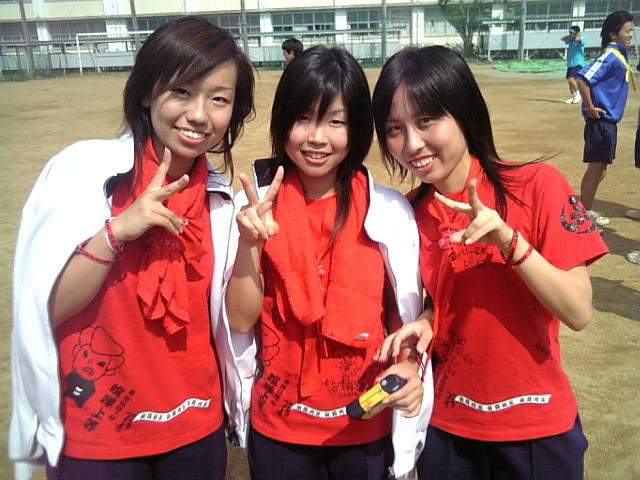
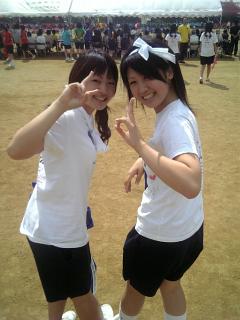
Another fun thing to point out is that I asked them to look back when I took the shots so I could get their faces, but some of the girls were too embarassed and just stayed turned around. The fun thing is that despite not looking at the camera, they still made the peace sign in front of them.
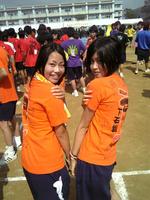


This picture I Iove because this girl on the right was acting so embarrassed and feigning reluctance to have her picture taken, making a big fuss right up until before I snapped the shot, when she suddenly pulled this demure, come hither look.
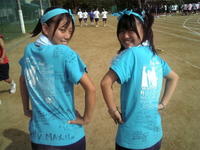


However, after I took a few pictures, I didn't have to even ask, since girls started coming up to me on their own. The girls with the matching headbands too were just too cute.
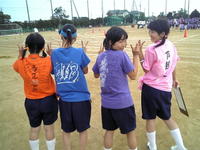


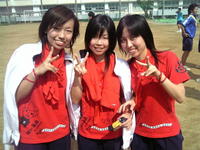
After a few more pictures, I didn't even have to leave the tent, since girls started coming all the way up to my chair and asking me to take pictures of them. The girl on the far left in this picture asked if I would take a picture of her, and when I told her I had already taken one of her color, seemed on the verge of tears. So I relented and took one of her and her friends.
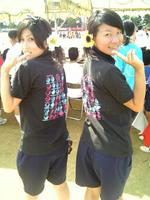


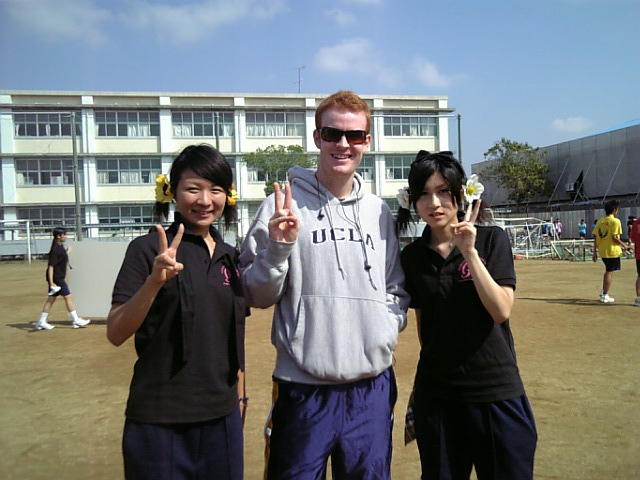
So to counteract the image of me as some sort of stalker here, all these pictures were taken with the consent, if not the insistence, of those involved.These two, actually, came up behind me at the tent and stood there for 5 minutes until I noticed them and asked them what they wanted. Struggling for the English words, finally they just handed me the camera.
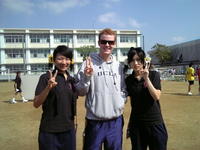


I took a picture of them, but they kept waiting around. Finally, I just asked them in Japanese what was up, and, relieved, they asked for a picture with me too. The girl with the dandelions in her hair then followed me around for the rest of the day and now goes into hysterics of waving every time she seem me in the halls. Fun job, this.
Wednesday, September 28, 2005

I'm a genuine excellency!!


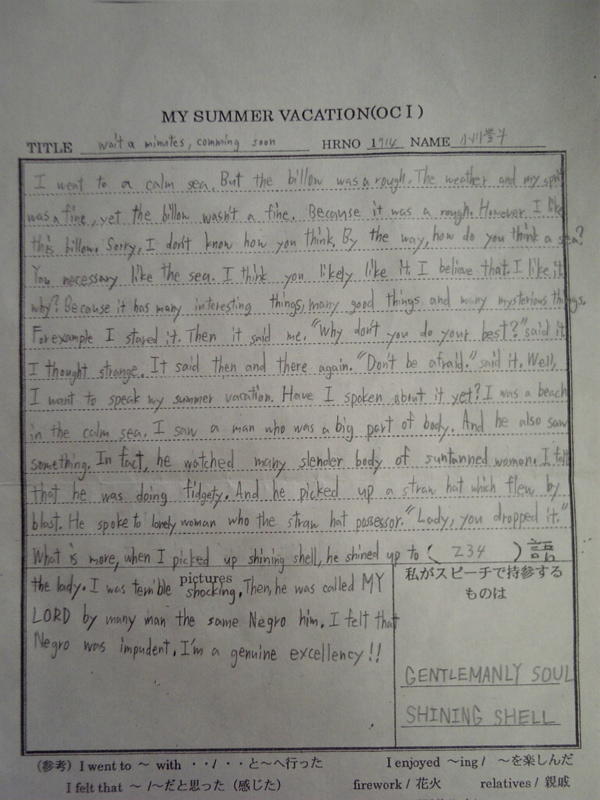
Wait a minutes, comming soon

Major themes:
Alienation from other people, alienation from reality, Attempt at communication with nature to reach true meaning in life, loss of self, fear of black male sexuality, sexual insecurity

Part 1: The calm sea

Summary:
The narrator visits the sea, but though he finds the sea calm, the "billow" is rough. The weather and his spirits are also fine, yet the "billow" is not. Again, it is rough. Still, the narrator explains, he likes the billow. He wonders how the reader feels about the subject, apologizing for not knowing without asking. However, he admits it's a given that the reader will like the sea, or at least likely. The narrator lists the reasons he likes the sea.

Vocabulary:
"billow" - a Japanese-English word that can refer to any one or none of the following: "billow" "billowing" below" "blow" "buy low" "by row"

Analysis:
The writer presents the reader with a common image of the calm sea only to abruptly set the reader foundering with the introduction of the "billow". The term remains ambiguous throughout, defined only in terms of what it is not (ie: not calm, not fine, not the sea, not the weather, not his spirit). The reader is further thrown off-guard by their sudden inclusion into a dialogue with the narrator himself as he asks conversational questions in a rhetorical fashion, presuming to know already the mind of the reader. However, the narrator reveals himself as, despite his rhetorical swagger, not entirely sure of even what he himself thinks; he "believe[s]" he likes the sea. His very thoughts seek outside confirmation. From this one could presume that the questions he asks of the reader are really just offshoots of this modern individual grasping for definite meaning in a world stripped of God and His Word.

Part 2: The dialogue with the sea

Summary:
The narrator begins to stare at the sea itself when suddenly he hears the voice of the sea calling out to him. It asks him "Why don't you do your best?" He is somewhat confused by the experience, but the sea consoles him, telling him "Don't be afraid."

Analysis:
The "mysterious things" of the sea foreshadowed previously are revealed in this section. One cannot read this passage without being reminded of Camus' The Stranger, when a man walking along a beach with the hot sun burning down on him suddenly commits a senseless murder. However, in this Stranger-esque experience, this sea does not urge the narrator to kill, but just to "do your best." The previous passages alienation from self is found here along with a need to find answers outside oneself in nature - even to the extent of an imaginary dialogue with the sea - rather than to confront the enormous responsibility of defining one's own life. There is a suggestion that this might even lead to a sort of madness; one is left unclear on whether the narrator realizes this as an imaginary or actual situation.

Part 3: The Negro and the many slender body of suntanned woman

Summary:
The narrator, on the same beach with the calm sea (presumably with the "billow" as well) spots a large (African-American) male. The man stares at nearby women suntanning. The narrator watches the man pick up a straw hat caught in the wind and return it to the owner. Picking up a shell, the narrator catches the man as he "shined up" to the lady. The narrator, and others watching, are shocked at the nerve of this "Negro".

Vocabulary:
"a big part of body"- a man with a large, muscular frame
"Negro" - relating to or characteristic of or being a member of the traditional racial division of mankind having brown to black pigmentation and tightly curled hair, from the Spanish word for "black".

Analysis:
The narrator suddenly shifts from himself to a description of an apparently licentious "Negro" at the beach. This shift can only be intentional, to shift both the focus and the blame for his problem onto someone else. This "impudent" African-American makes a convenient scapegoat - as he has so many other times in history. The narrator, if he is to be believed, is a passive observer of the ravaging of women on the beach by this "Negro", which leaves him shocked, exclaiming "MY LORD" along with the other onlookers. However, as often the case, this overt sexualization and fear of the black man really is a sign of both the sexual frustration and repression of the narrator himself. Why else does this anger or shock him so if it is not that this black man is willing to both openly seek and indulge passions the narrator cannot even admit to wanting, let alone satisfy? Rather than dealing with his dark desires, he simply projects them onto this other man, seeking to fool himself and draw the reader as well into propping up his fragile psyche. The final statement of "I'm a genuine excellency" just strikes the reader as a desperate cry from the narrator out into this emptiness of personal denial and existential meaningless as if to overpower and fill it up with bravado; full of sound and fury, signifying nothing.

Thursday, September 15, 2005

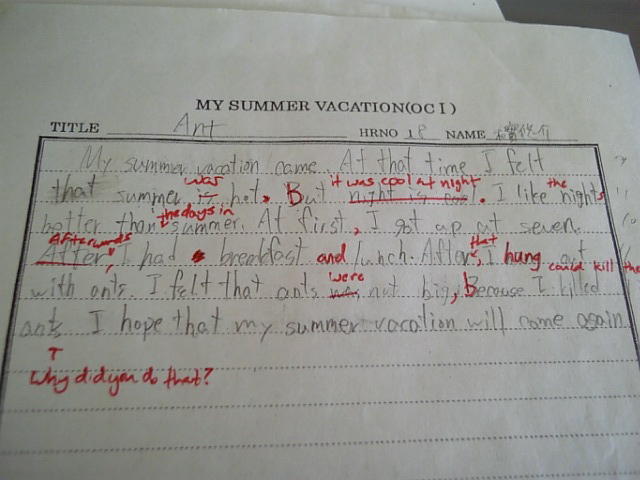
Hanging with Ants


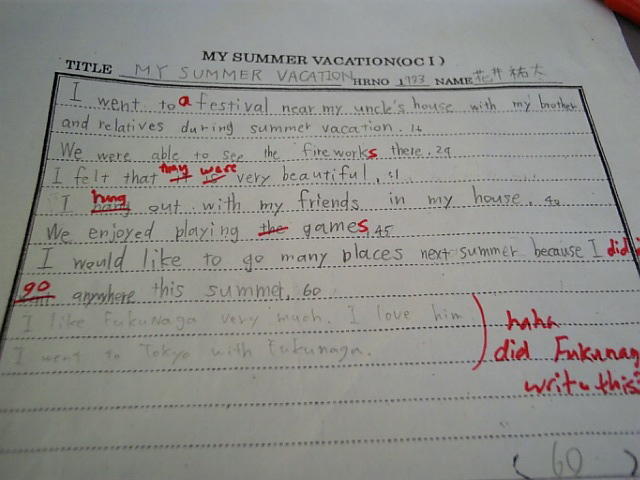
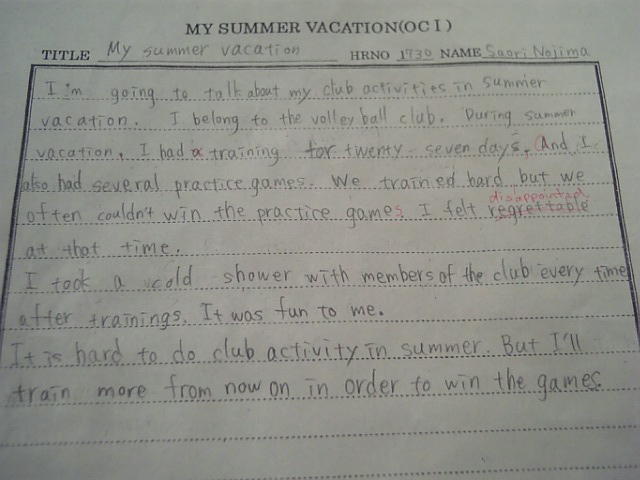
I am in the midst of grading the summer homework of all my students, which amounts to me reading over paragraphs about what all 400 of them did this last summer. One thing that stands out is most of them live awful lives. At least half of the papers are something like:

"This summer I had practice for the (insert name of club or team) every day. Practice was very long and very hard. And at the end of the day I was very tired. I did not have time to see my friends. But we went on a training camp and that was fun. I want to train hard to get better. But I hope I can see my friends next vacation."

At first I felt a terrible sympathy for these kids, but after reading 200 of the same ones I am about tapped on empathy. Right about then though, when you just feel like you've had enough, is when you get one of the money essays. They are either:
1. Unintentionally funny due to grammar mistakes, often misuse of pronouns like "it".
2. Unintentionally funny because they are crazy and you are incapable of extracting what the hell the writer actually wanted to say.

So here is a great example of #1, an innocuous tale of training camp that gets rather racy. My mind had started to dull after grading for an hour or so when suddenly my listless eyes ran over the second paragraph. Then I just started chuckling as I imagined the scene, not just of someone loving taking cold showers with her friends but the look on her face if she realized what she was actually writing. Even worse, these are part of a show-and-tell assignment, so if I left it uncorrected, this girl would stand up in front of the whole class and declare her love for cold showers with teammates.

These, however, result mostly in just juvenile snickering. The next essay category is so baffling it is just fantastic. This is where I get to read stories like this one a kid wrote about catching a catfish at the river and then bringing it home to raise as a pet. Great lines there, like "The catfish, as you know, has a hearty appetite." He fed it whole goldfish and crayfish, and plans to bring it in for show and tell.

This one though, both amuses me and frightens me. I love how this essay begins with a normal description of day - getting up, talking about the weather, eating a meal - and then all of a sudden, he just says casually, "After, I hang out with ants." Oh, yeah, hanging out with ants, sure. So I get this picture of the kid finishing his lunch and tramping outside to stand hovering over an ant pile for hours at a time. Then, it takes a turn again and I imagine him sitting over the ants like some future serial killer, enthralled with his chance to finally exercise control over a world that has left him out, coldly dealing out death, all the while cackling wildly. And, the kicker, is the closing sentence. He can't wait for next summer because, to this kid, summer=hanging with ants.

I get at least one of these for each class of 20 kids. Now I've just got to make a list of students to watch out for.

Wednesday, September 07, 2005

Cock of the walk


Last Thursday was the first day of the Fall term, so they held an opening ceremony to welcome me to the school. Most other JET teachers have a similar event on their arrival, in which they are expected to stand in front of all the students and give a short self-introduction, in English usually. Anticipating this, I wasn`t too worried about the event. However, mine was a little different because of my (reputed) Japanese ability. The vice-principal approached me a week or so earlier and told me he was really looking forward to my speech in Japanese. I, a bit confused as to the idea of giving an actual "speech" asked him how long they expected me to speak. He explained that, considering my level of langauge study, they were planning on at least 5 minutes. He shrugged his shoulders and said casually, "surely a graduate of UCLA who studied at Waseda would have no problem giving a speech like that."

Basically, the vice-principal called me out.

So I wrote a real speech over the next week, occasionally consulting with my personal tutor (Maiko). I finished it the day before the ceremony and handed in a copy to the vice-principal.

Thursday morning was also a fire and earthquake drill, so I was to give my speech at after the students had evacuated out onto the athletic grounds. Fun thing about the emergency drills here, every student and teacher has a white helmet to wear. I have a helmet too, but since I have a freakishly large head even for a white person, the helmet is too small to protect me entirely. So I have to decide, when the time comes, whether I want to protect the front or back of my skull(I actually consulted with the biology teacher about which lobe of the brain would be more vital; whether I would choose basic functions over higher thought). Even more awesome than the helmets are the great blue jumpsuits that the principal and vice-principal put on in emergencies. They look either like a garbageman or a spaceman, depending on which you find more amusing. The idea of there being an earthquake and the principal running off to throw on his jumpsuit is just fantastic. Maybe he stands in front of the jumpsuit, housed in a glass case, wondering whether the situation really warrants it - is this really a "jumpsuit worthy" emergency? Anyways, like we don't know who the principal is already. Japanese people don`t look that similar.

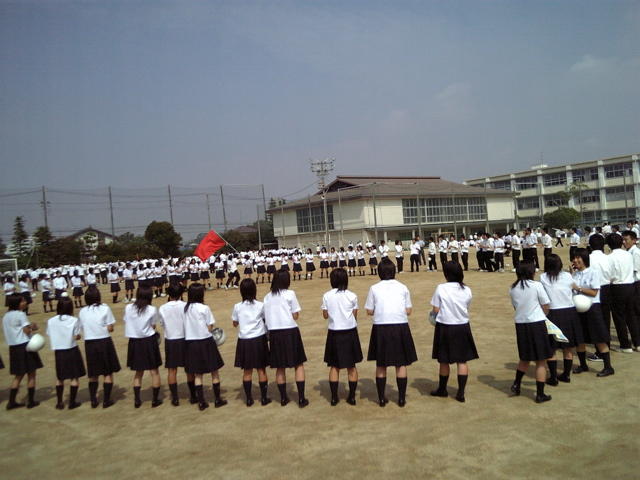
The students and teachers tramp out to the athletic field - more accurately the big, open dirt space that passes for a field here - and line up in neat, orderly rows. The students are all wearing their uniforms, accompanied by their white helmets. A teacher stands in front on an elevated platform and barks orders at them through a loudspeaker. There is a definite fascist air to the proceeding. I amuse myself by imagining having a friend here who doesn't understand Japanese and wildly mistranslating the speech about earthquake safety into some deranged rant about the need to raze the corrupt bureaucracy to the ground and seize power in a wave of bloodshed, the only way to restore the honor of this ancient nation which has lost its way, in the name of the true Japan and its eternal symbol the holy Emperor! Actually, let me attach a great picture taken shortly after the ceremony from the preparations for the big sports festival. This needs even less fake explication to invite images of fascism/communism.

Anyways, I stand in the sun with the other teachers until I see the old kendo teacher standing by himself over in the shade. I have already been outside in the 90 something degree sun and awful humidity for 15 minutes, which is 15 minutes more than my pale sickly skin can stand, so I go join the old guy in the shade. Emboldened by my rash, individualistic decision, several other teachers who were planning on suffering silenly join us under the trees nearby. We watch the continued ranting of the man on the platform while cooling off, both pitying and amused at the students who remain roasting in the hot sun. I wonder what effect this will have on their excitement about listening to my speech. I show my speech to the Beach Boys teacher, he finds it very amusing, but in a nice little stab right before I go on stage, warns me that Japanese students probably won't laugh when assembled as a group, even if they do find it funny. I imagine 1200 students staring at me when a joke falls flat, and his comment cuts me like the experts who bleed the bulls before they are sent out to meet the matador.

The rant ends, the principal takes the stage and I am introduced. The eyes of all 1200 students turn to me as I stride up to the podium. I look up at the students, take a deep breath and start my speech in Japanese:

おはようございます。("Good morning")

A rush of murmurs breaks over the students like a wave as they realize I am going to give the speech in Japanese. It occurs to me that none of them knew beforehand that I could speak Japanese.

"Nice to meet you. My name is Lucas Adams, I'm from San Diego, California, in the United States. I'm 22 years old and I just graduated from UCLA. Having majored in Japanese at UCLA and studied it at Waseda last year from January until September, that I am still this poor at speaking the language is really quite embarassing, isn't it? Really, I'm quite sorry."

The students, over their initial shock, laugh at this obviously false modesty, giving that I have just said all this in perfect Japanese. I, over my initial apprehension, fall back into my usual comfortability with public speaking, and feel totally in control again. I start by talking about the difficulties in speaking a second language, joking that I am glad I was born in the US just so I never had to learn English in school. I tell a fun story - one oft repeated on any occasion I can find, really - about mixing up the words "okoru", to become angry, and "ogoru", to treat to a meal when out on a group date last year with several Japanese. The punch line is, of course, me accidentally offering to pay for everything and ending up out of some $150.

"Perhaps you all have been told before, 'One learns from their mistakes'. Well, I learned quite well from that one. $150 is a an expensive vocabulary lesson, ne?"

The students eat this up.

I then shift the speech to something a bit less funny, but being given a chance to actually address all the students and teachers at once, I felt it was too good to pass up. Also, it being the beginning of my time at the school, I wanted to make plain my beliefs about education. So, if I strangely had to translating my own writing from Japanese back to English, it went something like this:

"Of course, in today's Japan English study is important for both entering a good university and future success in the work force. However, when studying, there is something you should not forget. English is not a subject just like math or science. If you study physics or math, you will come to understand the laws that govern the world around you, and cause and effect in the world will become clear to you. However, studying English is not studying the world. English is purely a tool of communication. If you don't use it, it will rust. But, if you use it correctly, it can open up a new world previously closed to you. I feel this has happened to me with Japanese. You can make friends, you can travel, you can have new experiences. But it can also lead you into new awakenings within your own mind. Languages do not overlap exactly. English is more analytical and direct. Japanese is more subtle and intuitive. Learning more languages opens up more modes of communication of our emotions. Language is something that lives outside of the classroom, but if you treat it purely as an academic subject it will lose its meaning and die. If you treat it as a living thing, it will improve your life. Thank you."

I bow to the students, walk off the platform and bow to the principal, who smiles broadly. Rejoining the teachers in the shade, they are somewhat shocked. I realize again, that most of them didn't know I could speak any Japanese either. The Beach Boys teacher gives me a pat on the back. I walk off feeling like a politician fresh off a stump speech with my shirt and tie; another teacher compares me to a dictator riling up the crowd. I feel as if it was successful above all my expectations, though, to be fair, my main wish was just not to totally die on stage in front of 1200 students. For the rest of the day, teachers come up to me separately to tell me they enjoyed my speech greatly and agree with what I said about the nature of language.

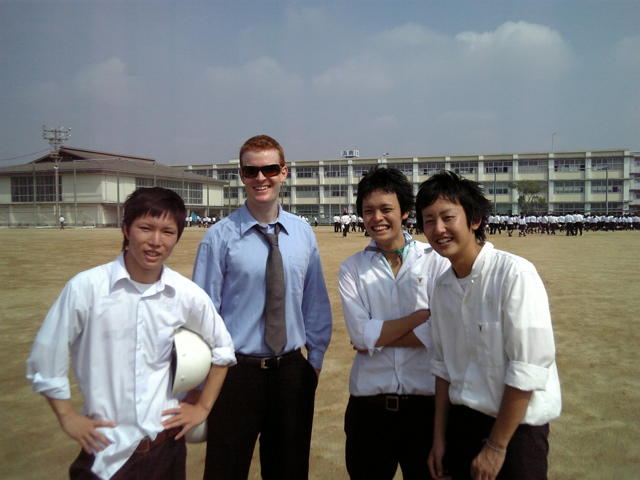
The students, on the other hand, seemed to only absorb certain parts of the speech. My library buddies from the previous story (I made $150 today), pictured here, run up to me afterwards to giggle about dating girls. Students come up to me all that week to laugh about the stories. One girl in class looks up at me, dreamy-eyed, hands on her cheeks, leaning her elbows on the desk, sighs and swoons, "I wish you would take me out, Mr. Adams."

Ah well...I should have learned in debate to play to my audience.